I didn't sleep the night before my first class. Not even close. Fortitude Fitness Owner, Lauren had been asking me to come for weeks, and I had finally run out of excuses — but lying in bed that night, my brain had plenty more to offer. What if I can't do the movements? What if I'm the worst one there? What if I literally can't finish? There's a specific kind of dread that comes with doing something new in front of other people, and I felt every ounce of it at 5am. I seriously considered texting Lauren and bailing. I almost convinced myself I needed to "get in shape first" before I'd be ready for whatever she was going to have me do — which, looking back, is like saying you need to get clean before you take a shower.
I'm so glad I walked into that first class.
Most of us don't walk into a gym because everything is going great. We showed up because something shifted. Maybe it was a photo that stopped us cold, a doctor's visit that felt like a wake-up call, or just a quiet moment where we realized we weren't living the way we wanted to. For me, it was a combination of all three — I was 42 years old, I could feel my energy slipping, my body just hurt, knees ached, back was sore all the time, and I knew I had more in me than I was showing up with. That feeling — the one that says something has to change — is actually a gift. Don't ignore it.
The hard part is that knowing you want change and actually doing something about it are two very different things. The gap between those two things is where most people stay stuck. Taking that first step, even a small one, is the hardest part of the whole journey. I was 42, achy, and exhausted. I had no idea that one sleepless night was about to change everything.
Before your first class, your brain will do everything it can to talk you out of going. I'm not fit enough yet. I'll look silly. Everyone else will know what they're doing and I won't. I had every one of those thoughts. What I didn't realize was that every single person in that room had stood where I was standing at some point.
Walking through that door for the first time is an act of courage. It really is. You don't know the movements, you don't know the people, and you're willingly putting yourself in a position to be uncomfortable. But here's what I've learned — that willingness to be uncomfortable is the entire foundation of growth, in the gym and in life.
The coaches are there to meet you where you are. The members remember what it felt like to be new. The community at Fortitude exists because of people who were brave enough to show up on a day when everything in them said don't go.
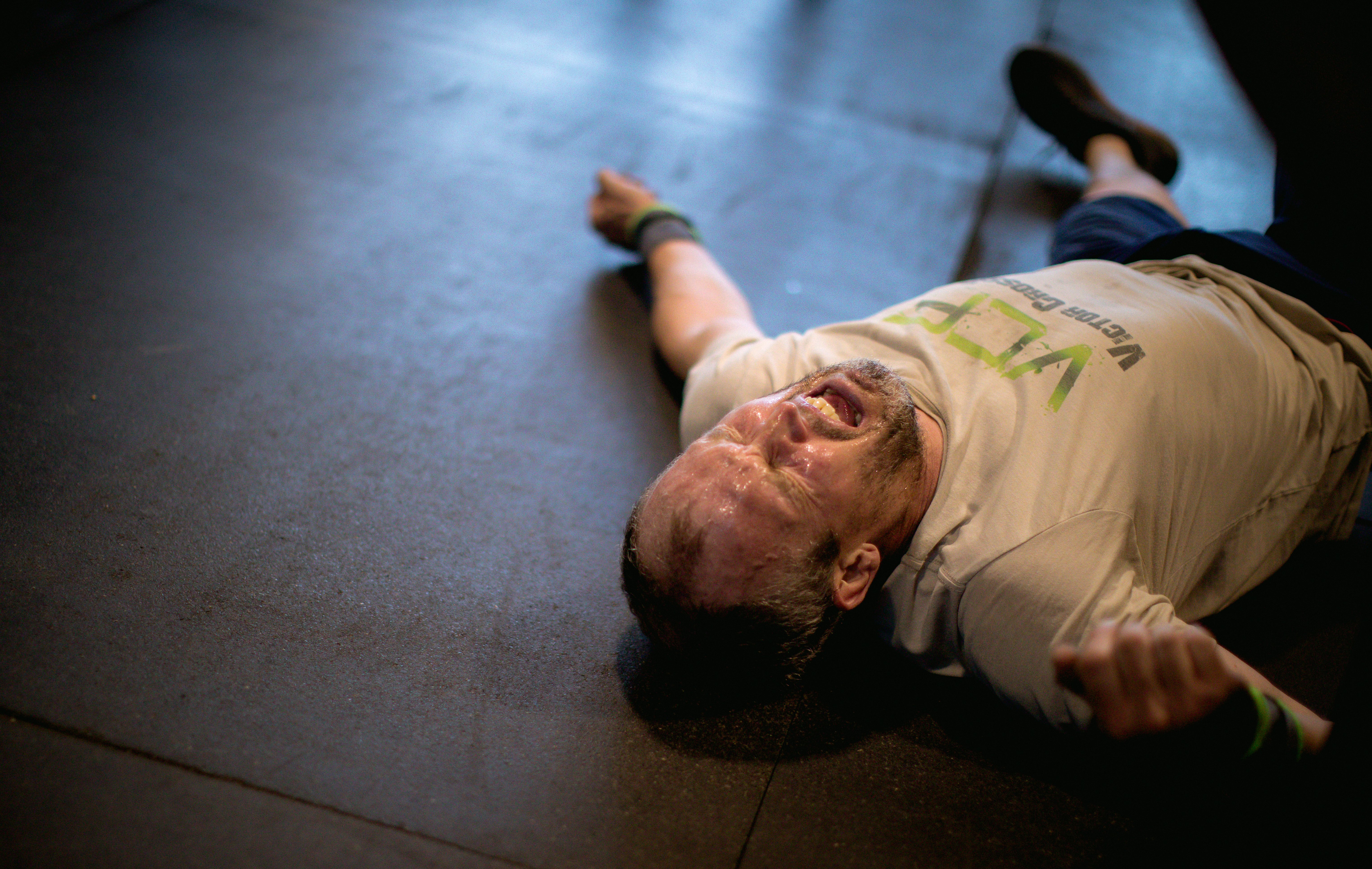
Your first month is going to be a wild ride. You will be sore in muscles you didn't know you had. You will scale movements. You will finish workouts dead last, or even at all, and it will feel like a victory anyway. That's because it is a victory. I vividly remember the first few workouts which included burpees, handstand pushups, and front squats and the memories and emotions that came with them.
The beginner gains in CrossFit are real and they come fast. Your body is adapting to new stimuli, your nervous system is learning new movement patterns, and you'll notice changes quickly — in your energy, your sleep, the way your clothes fit, and the way you feel walking up a flight of stairs. This phase is exciting and addictive and it's easy to think it will always feel like this.
The most important thing to do in the first month is simply show up consistently. You don't need to crush every workout. You need to build the habit of showing up and doing the work.
One point of caution: after those first few weeks you are going to feel amazing and will get addicted to that feeling. It is very important to listen to your body and make sure you rest. You will see plenty of progress with 3 classes a week — that doesn't mean you should do 5.
By six months, CrossFit has become part of who you are. You've started to develop real skills — maybe you got your first pull-up, hit a new deadlift PR, or finally strung together double-unders without turning your shins into a crime scene. The movements that felt foreign are starting to feel natural, and you've probably experienced most of what the programming throws at you without completely panicking when you see it on the whiteboard.
For me, the six month mark came with a quiet but important realization: I was actually good at some of this. Not elite, not RX, but genuinely competent. I remember finishing a workout one morning and thinking — I couldn't have done that six months ago. Nobody gave me a trophy for it, but I did get lots of high fives.. There was no dramatic moment. Just me, catching my breath, knowing something had shifted. That feeling is worth every sore morning that got you there.
This is also when the fast early progress starts to slow down, and that can mess with your head if you're not prepared for it. Your body has adapted to the training and it's going to require more intention to keep progressing. This is not failure — this is actually where real fitness begins. Stay patient. Trust the process. The athletes who push through this phase are the ones who end up doing incredible things.
A year into CrossFit, you look back and genuinely can't believe how far you've come. Not just physically — though that transformation is real — but mentally. You've learned to be comfortable being uncomfortable. You've shown up on days you didn't want to. You've done hard things and survived them, and that bleeds into every other area of your life.
At one year, you're also navigating one of the sneakier parts of the member journey: the mid-journey slump. The newness has worn off, the fast gains have leveled out, and some days the motivation just isn't there the way it used to be. This is completely normal and happens to almost every athlete. The key is shifting your why from external results to the deeper identity you're building. You're not just someone who works out. You're someone who shows up and does the work.
I know this slump intimately. I remember standing in the gym one day and telling the coaches, dead serious, "My new motto is scaled for life." I had hit a wall. The gains had slowed, the RX weights felt permanently out of reach, and I genuinely couldn't see a path forward. It felt less like a plateau and more like a ceiling.
But I kept showing up. Not because I felt motivated — honestly some days I didn't — but because it had become part of who I was. I worked on my form. I focused on the small things. And slowly, almost without noticing, things started to click. Then came my second year participating in the Crossfit Open. I finished two of the three workouts RX.
I can't fully describe what that felt like. It wasn't just a fitness milestone — it was proof that the version of me who declared "scaled for life" didn't get to write the ending. The work did. That old motto got retired, and good riddance. I now realize that there is no ceiling if you are committed to your goals, show up, and do the work.
Three years in, CrossFit stops being a thing you do and starts being a part of who you are. Your goals look different now — less about proving something, more about building something lasting. You train for the mountains, for longevity, for the feeling of knowing your body can handle whatever life throws at it. And you've probably become the person in class who remembers what it felt like to be terrified on day one, and makes sure the new person knows they belong there.
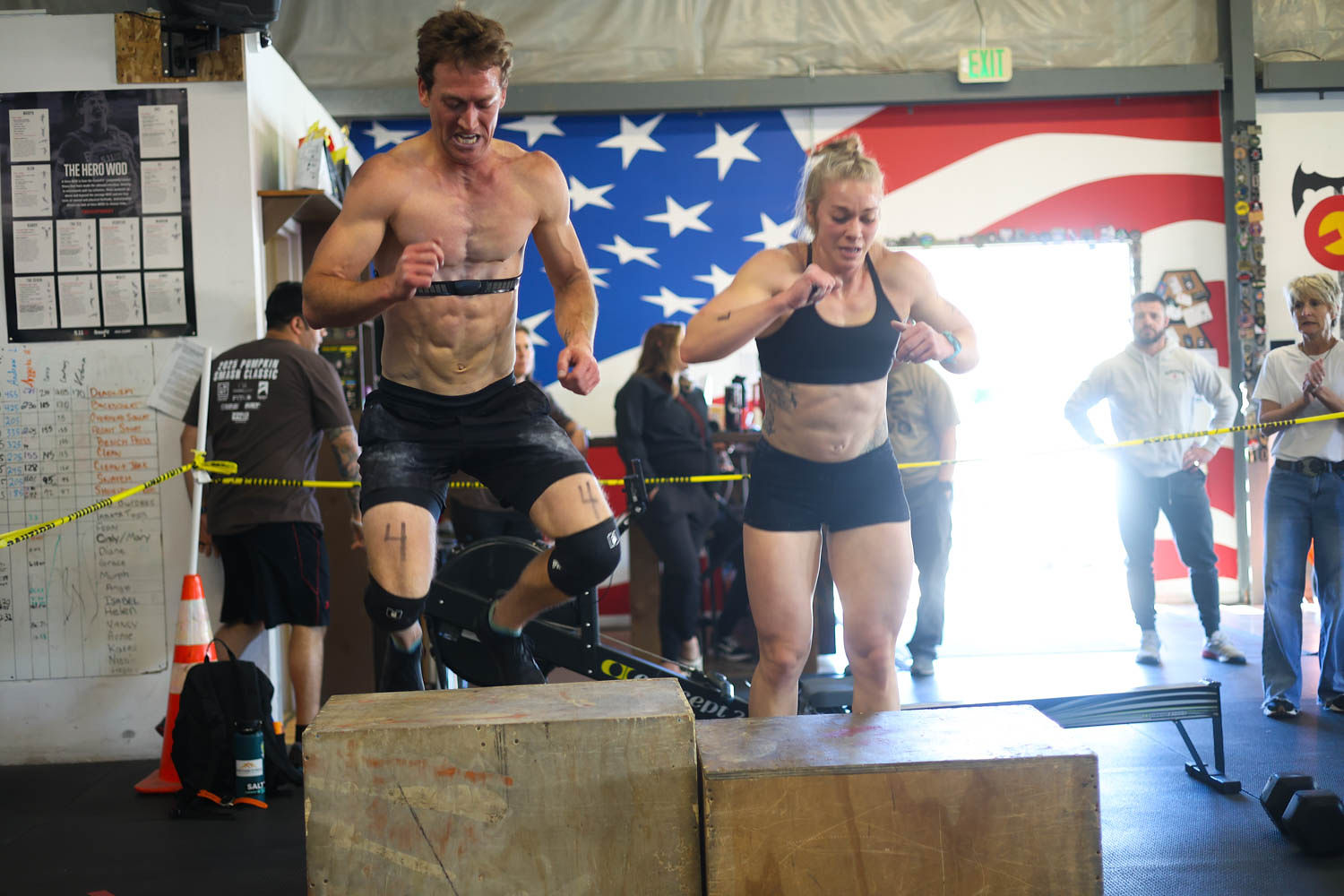
Yes, people call it a cult. I used to roll my eyes at that. Now I understand it. CrossFit has a way of rewiring how you see yourself — what you're capable of, what hard work actually feels like, what community really means. There's nothing quite like standing in a room of people who are all different ages, different fitness levels, all scaling the same workout differently, and somehow all hitting that wall of suffering at the exact same moment. That shared experience is hard to explain to someone who hasn't felt it. But once you have, you never forget it.
Oh, and those movements that nearly killed me on day one? Burpees — need me to do 50? Yeah, I got you. Front squats — check out those high elbows. Handstand pushups — okay, still a work in progress. But that's kind of the whole point, isn't it? There's always something to chase.
My current challenge? Nutrition. CrossFit's Theoretical Hierarchy of Development puts Nutrition at the very base — before conditioning, before gymnastics, before lifting. Everything else is built on top of your nutrition. As someone who has spent two decades in the restaurant world, cooking and studying food, I genuinely thought I had it handled. Turns out knowing about nutrition and actually dialing it in for your specific goals are very different things.
That's where Lauren comes in. Having a coach who holds you accountable — even when you think you already know the answers — is a game changer. The fitness foundation is solid. Now we're building on top of it properly. I have no idea what the next three years look like, but I know they're going to be better than the last three. And I couldn't have said that standing in that parking lot, heart pounding, at 5am three years ago.
My own journey has taught me that fitness isn't a destination with a finish line. It's a practice — one that challenges you, rewards your consistency, and quietly changes who you are over time. There will be weeks you feel unstoppable and weeks you feel like you're going backward. Both are part of it.
Whatever brought you to the door of Fortitude Fitness, I'm glad you're here. The version of you that shows up three years from now is going to be grateful you didn't drive away from that parking lot.
Let's get to work.